

Were you a boomer who got ripped maniacally going to the gym, counting carbs, and hiring a personal trainer? OK, maybe that wasn’t you - but I bet you knew someone who did, and you were quietly relieved it wasn’t your thing.
Guess what. You’re now suddenly over 50, and your doctor is telling you exercise isn’t optional anymore. You’re now dealing with a big fitness word: Dynapenia — the age-associated loss of muscle strength and power that significantly increases your risk of functional limitation, falls, and mortality.
The Stakes
And here’s the kicker. Falls are now the leading cause of both fatal and nonfatal injuries among adults over 65. In a single recent year, nearly 39,000 older Americans died from falls. The death rate has more than doubled since 1999, and it keeps climbing.
You thought you were just getting a little older. Turns out your body has been quietly renegotiating the terms of the agreement.
That’s where group fitness enters - not as vanity project, but as survival strategy. One that can help ensure that as you age, you’ll be prepared to do more of the things you love, and avoid the kind of needless personal tragedy nobody puts on their calendar.
This transition can be smooth, lasting, and considerably easier with a bit of science-based planning. In the last forty years, we’ve learned a great deal about how psychology, neuroscience, and physical training interact - what makes exercise effective, and more importantly, what makes it something you’ll actually look forward to.
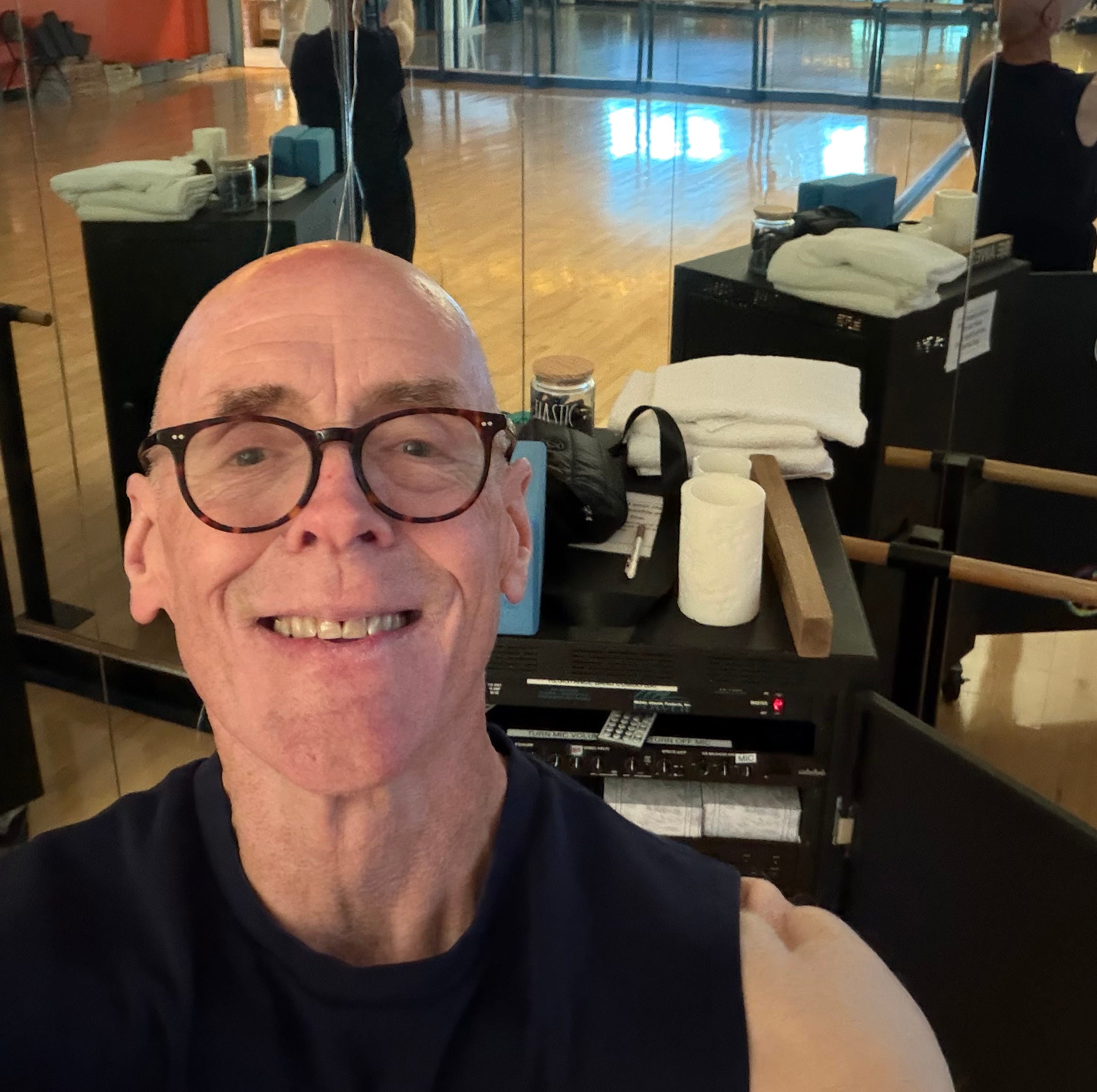
As someone who has been in the fitness industry nearly fifty years and taught over 5,000 group exercise classes, I’ve watched people come to exercise late, embrace it fully, and make it a permanent part of how they live - doing all sorts of things they love. And not falling.
Let’s break this down into three areas.
First: Finding Your Motivation to Start
If the risks of falling, loss of muscle and bone density, and a metabolism that leaves you exhausted and running on fumes aren’t enough of a wake-up call, maybe the positives of group exercise are.
Group exercise delivers a one-two punch most people don’t see coming. The Group Effect - the well-documented tendency to work harder and feel better when exercising alongside others - combines with the Köhler Effect, the phenomenon where the least fit person in a group unconsciously raises their effort to avoid being the weakest link. Together they produce enhanced pain tolerance, reduced stress, greater workout intensity, and longer duration. And the social dimension - seeing familiar, like-minded people regularly - turns out to be the single strongest predictor of long-term exercise adherence.
Second: Setting Realistic Expectations and Choosing the Right Format
Starting with an accurate picture of where you are, and finding the type of group exercise that fits how you’re wired and how you learn, eliminates most of the unnecessary derailment people experience early on. A few basic fitness facts can inform your judgment and save you considerable wasted effort.
Your First Few Classes
Expect to try several before committing to a single format or instructor. You’re surveying the landscape, not making a permanent decision.
Ask the front desk which formats and instructors are popular with the over-50 crowd. Start there. Get to class 10 to 15 minutes early. If the instructor is already in the room, introduce yourself - let them know it’s your first time, ask if there’s anything worth knowing, and find out what else they teach and who else they’d recommend.
Claim a spot in the back or along the side. Then start a conversation with someone who looks like a regular. Something simple: “Hi, I’m new here. What should I know? What do you like about this class?” You’ll be surprised what you learn.
Go at about 50 percent. Observe, follow, don’t worry about keeping up with anyone. You are not 35 anymore - that’s not a problem, it’s just your starting point.
Reading Your Own Body
It is always okay to stop. It is always okay to modify. Learn to recognize your body’s stop signals and respect them. Don’t confuse a productive challenge with overuse or pain that doesn’t belong.
Beyond fitness, you are developing body awareness - the ability to read your own rate of perceived exertion and shape your experience rather than just endure the class. Teaching a room of students with varied ages and fitness levels is genuinely difficult. A good instructor will get better at reading you over time. So will you. Showing up and staying curious is the work.
Third: Avoiding Burnout and Stagnation - Staying in the Game
As you settle into a regular class, three questions are worth asking after each session.
The Three Questions
Can I keep up? Progress isn’t always visible. A day where 100 percent feels like what 70 percent felt like last month is real progress - even when the number on the board hasn’t moved.
Is it working? One reliable read: how do you feel walking to the car after class? Not during, not the next morning - right after. That answer tends to be honest.
Should I push harder? Recovery deserves the same respect as the workout. At this stage of life, 48 hours between hard efforts isn’t optional - it’s non-negotiable. Ignoring it doesn’t make you tougher. It makes you slower to improve and faster to quit.
What Actually Makes it Stick
What keeps people going long-term isn’t willpower. Psychologists who study motivation have a name for what actually works: Self-Determination Theory. It identifies three things that, when present together, make behavior stick.
The sense that you chose to be here - that this is your decision, not an obligation imposed by your doctor or your guilt. The accumulating awareness that you are getting better - even when the improvement is internal and invisible to everyone else. And the experience of belonging to something - people who know your name, notice when you’re absent, and will still be there next week.
That last one takes time to build. Measure in months, not days.
The boomer who got ripped was chasing something. So are you — just something different now. Not a number on a scale or a reflection in the mirror, but the capacity to keep doing what matters. Group fitness, approached with realistic expectations and a little patience, is one of the most reliable ways to build that capacity. The science supports it. The community sustains it. And fifty years of watching people get this right tells me the only thing standing between you and a very good next chapter is walking through the door.
Start today. Show Up
.